





Theodore Roosevelt first came to the North Dakota Badlands in 1883, drawn by a landscape that would shape his worldview and his legacy. More than a century later, that same terrain becomes the setting for the Theodore Roosevelt Presidential Library, a civic institution embedded in the land that defined the 26th president’s enduring commitment to conservation.
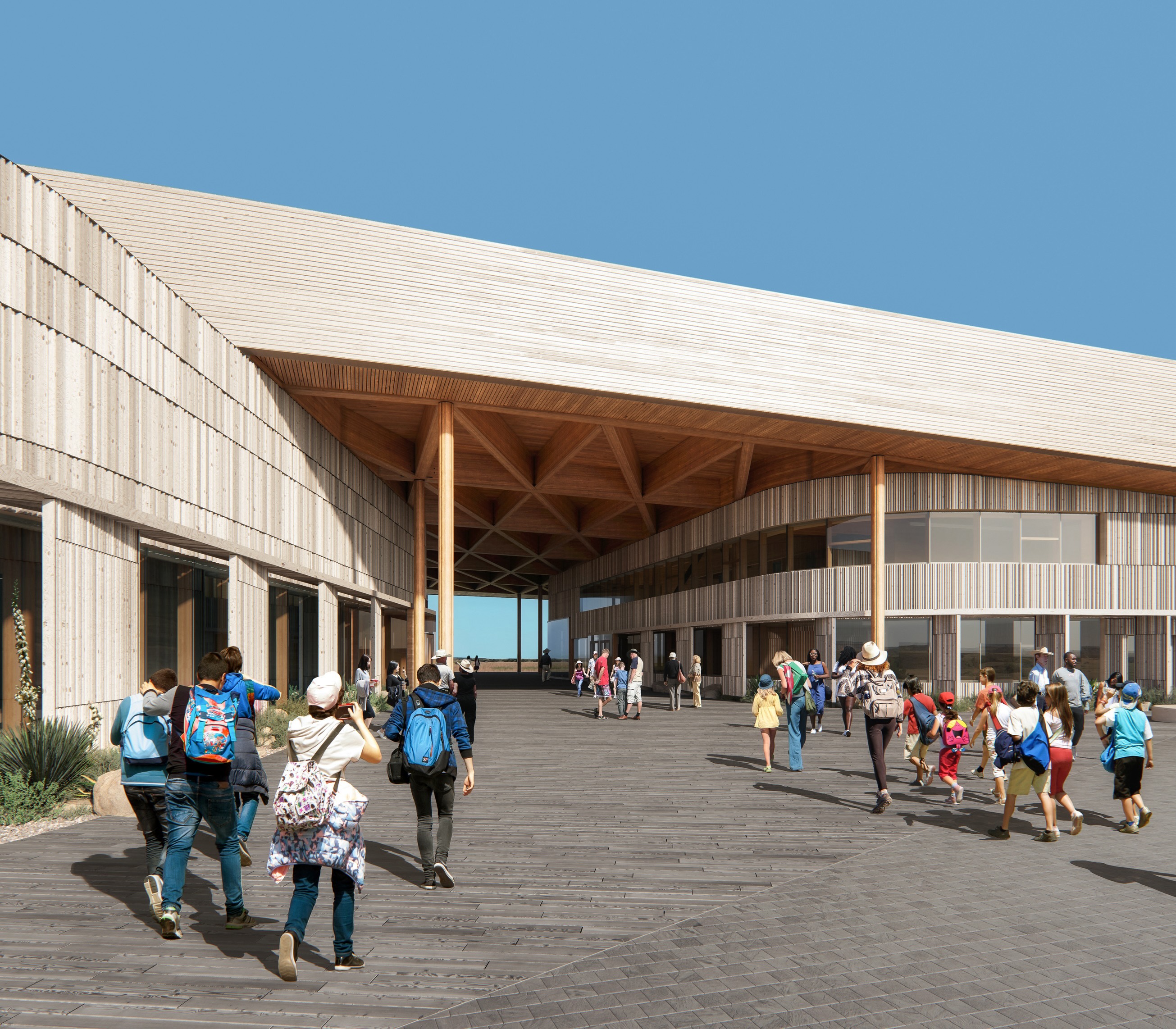
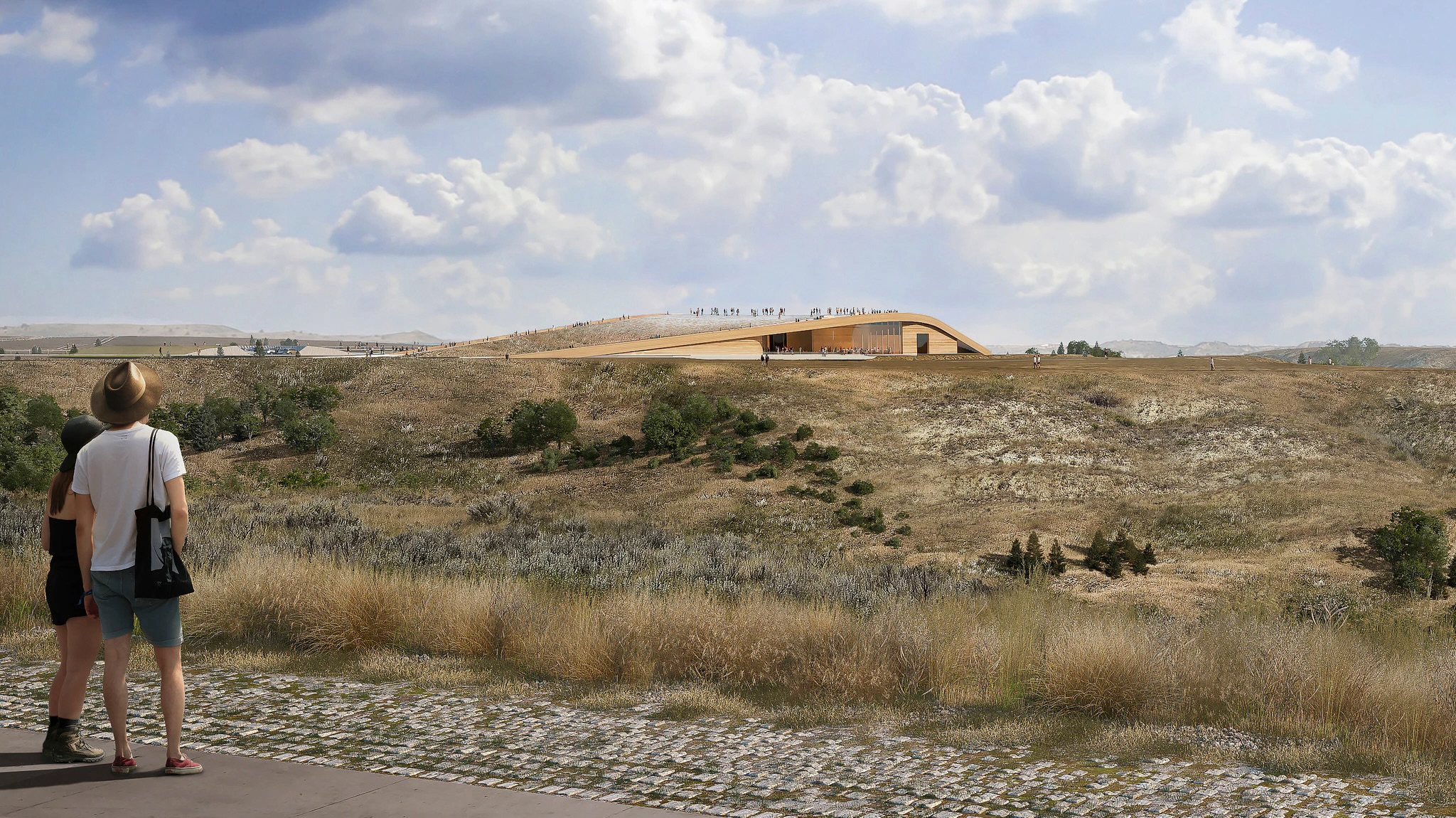
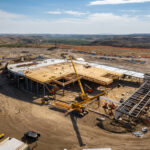
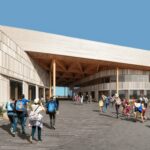
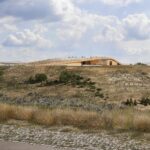
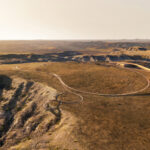
Set on 93 acres overlooking the canyons and buttes of Medora, North Dakota, the library is designed as a single-story building that extends horizontally across the site. With approximately 93,000-square-feet of interior space, the museum blurs the boundary between building and landscape, inviting visitors to move seamlessly between exhibition spaces and the surrounding Badlands.
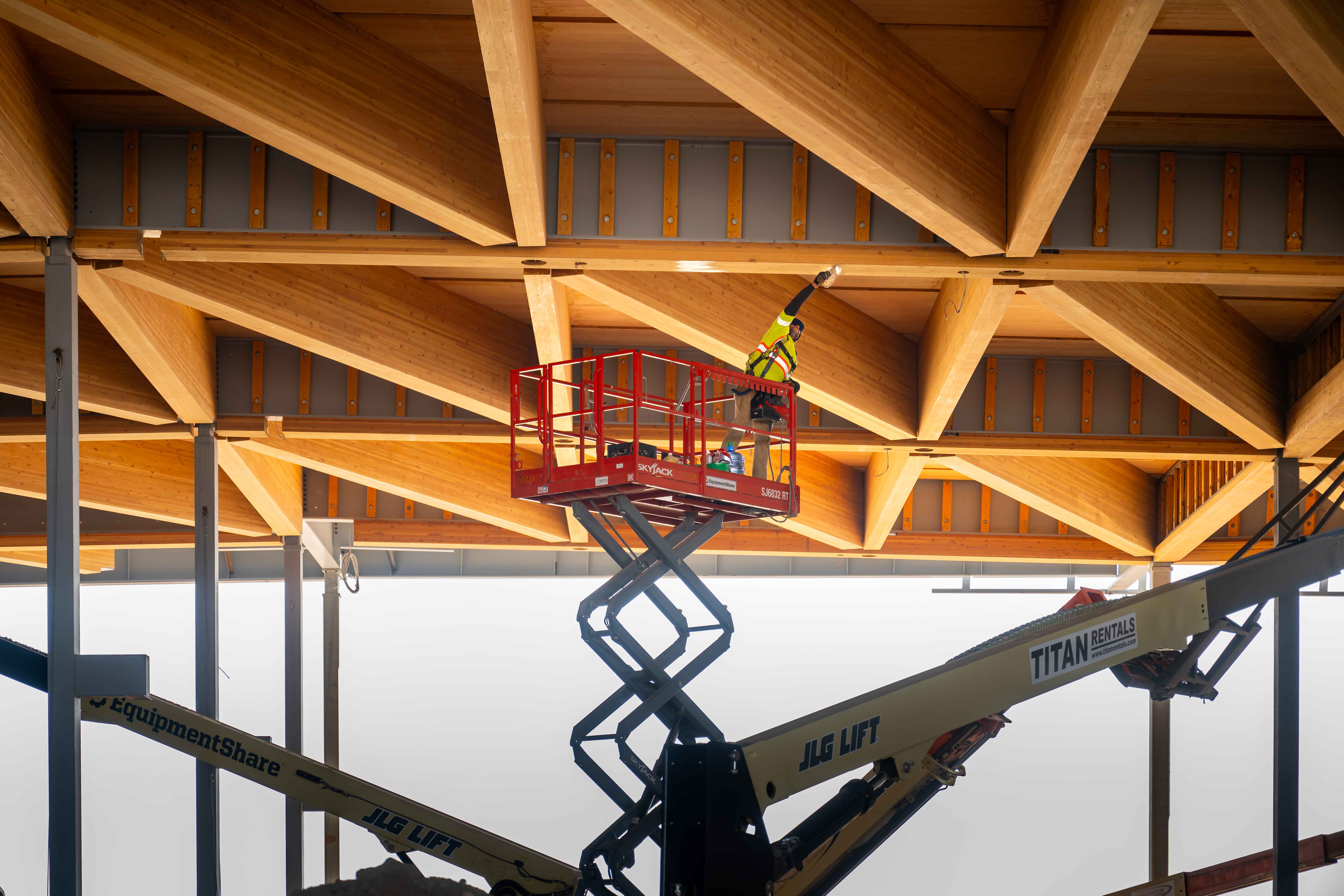
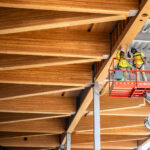
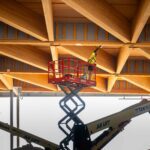
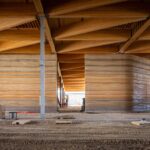
The building’s roof is central to the experience of the library. A network of glulam beams, arranged in a repeating triangular pattern, follows the gentle curve of the roof and supports a landscaped surface above. Below, exposed cross-laminated timber panels form the ceiling, creating warmth and continuity while supporting the living roof above. The roof’s curved geometry required careful coordination at every beam intersection. Using advanced digital modeling, the project team developed precise, concealed connections that allow the structure to read as seamless and intentional. Steel columns and girders provide the primary support and are wrapped in glulam, preserving a consistent timber character throughout the building.
Beyond the museum walls, the project unfolds as a network of paths, pavilions, and outdoor spaces designed for reflection, learning, and activity. The site supports conservation research, educational programming, and public engagement, evolving over time into a living laboratory that preserves and cultivates the native flora of the Badlands.
In partnership with general contractor JE Dunn, Mercer Mass Timber provided mass timber design-assist services, material supply, and coordination and logistics, including delivery of the project’s signature roof structure.
MMT supplied 2,615 cubic meters of CLT and glulam for the project. Phase One included the primary building structure and roof system, while Phase Two extended mass timber into exterior elements such as a footbridge and canopy structures supporting photovoltaic arrays. The project is targeting LEED Platinum and Living Building Challenge certification.
